Web development is one of the most accessible and in-demand skills today. Whether you want to build websites, create web apps, or start a tech career, learning web development opens many doors. The good news is that you don’t need a computer science degree to begin—just curiosity, consistency, and the right roadmap.
1) Understand what web development really is
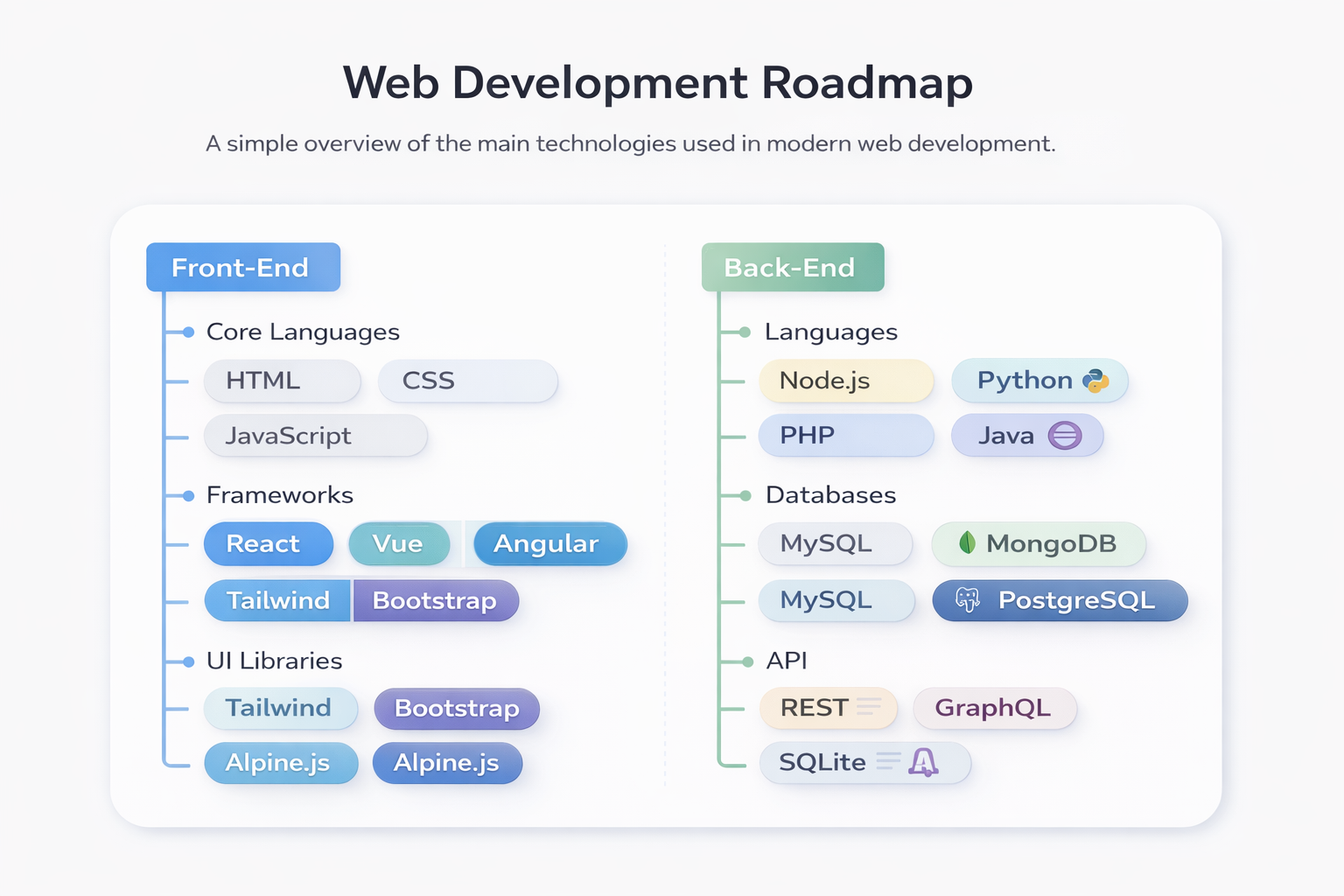
Web development is the process of building websites and web applications that run in a browser. It is commonly divided into frontend (what users see), backend (how data and logic work), and full-stack (both). As a beginner, you should start with frontend development because it helps you see results quickly and stay motivated.
2) Learn the three core technologies first
- •HTML – the structure of a webpage (headings, paragraphs, images, links)
- •CSS – the styling and layout (colors, spacing, responsiveness)
- •JavaScript – the behavior and interactivity (menus, forms, data loading)
These three technologies are the foundation of the web. Mastering them gives you the confidence to understand frameworks and tools later without feeling lost.
3) Practice by building small projects
Watching tutorials is helpful, but real learning happens when you build. Start with simple projects like a personal profile page, a landing page, or a to-do list. Focus on finishing small projects instead of chasing perfection.
4) Learn how to use Git and GitHub
Git helps you track changes in your code, and GitHub lets you store and share your projects online. These tools are essential for collaboration and deployment, and they are widely used by professional developers.
5) Deploy your projects and keep improving
Publishing your projects using platforms like Netlify or Vercel helps you understand how real websites work. More importantly, it gives you confidence and something to show others. Web development is a journey—keep learning, keep building, and don’t be afraid to make mistakes.
Starting web development may feel overwhelming at first, but every experienced developer once started where you are now. With patience and consistent practice, you can turn simple web pages into powerful, real-world applications.